Why Dogs Bark and Lunge on Leash: A Guide to Reactive Dog Training
August 29, 2026
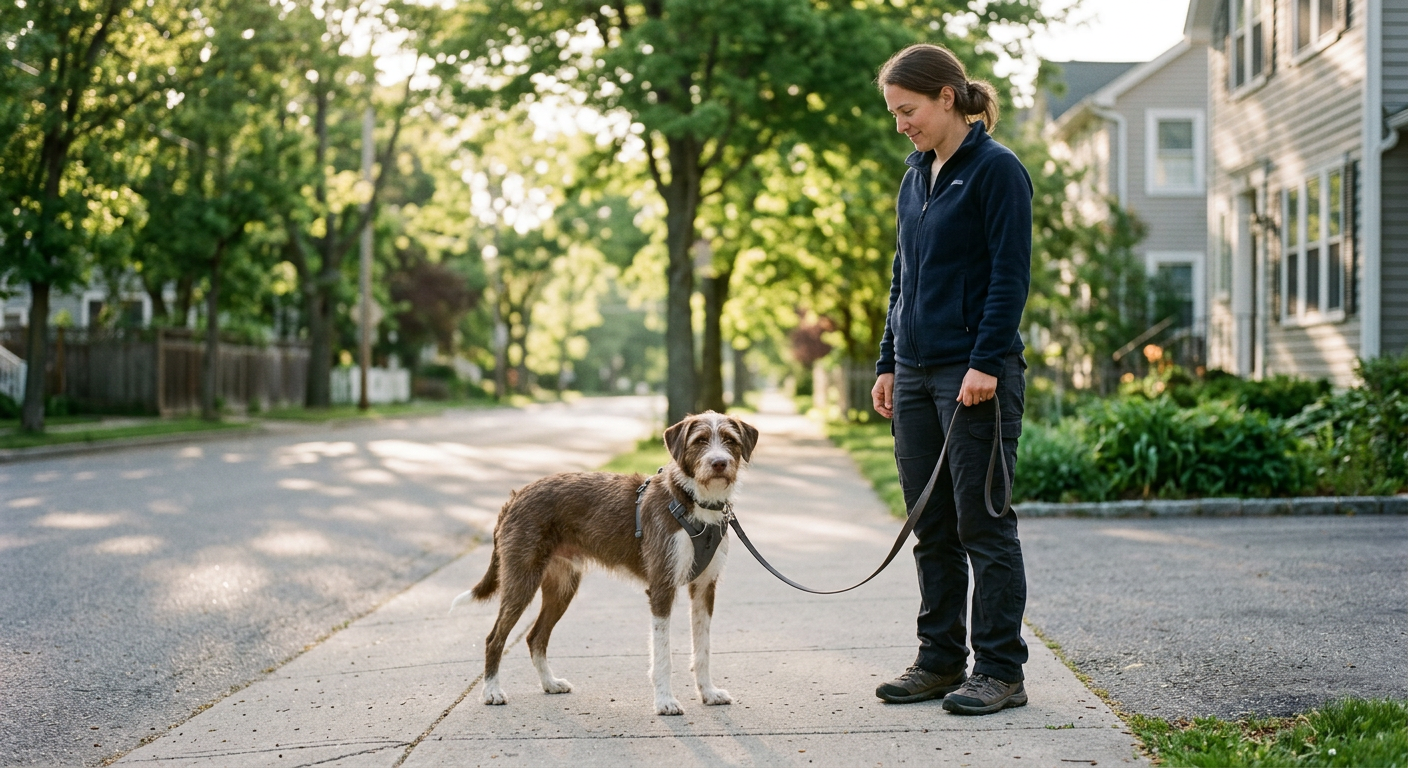
You turn the corner on a quiet morning walk, spot another dog fifty feet away, and instantly feel your stomach drop. Before you can change direction, your dog's ears pin forward, the body stiffens, and the explosion happens: barking, lunging, spinning at the end of the leash. For many owners, this daily struggle makes walks stressful and exhausting. Understanding the mechanics behind this behavior is the first step toward progress, and effective reactive dog training begins with setting aside labels and looking at what your dog is actually experiencing.
When a dog reacts intensely to triggers on leash, owners often assume the dog is aggressive, dominant, or simply acting out. In reality, leash reactivity is rarely that simple. Leash handling, emotional state, spatial pressure, and communication breakdowns all contribute to the explosive displays seen on everyday walks.
Moving Past Labels: What Reactivity Actually Is
Labeling a dog as "reactive" or "aggressive" describes a symptom, not the root cause. Reactivity is an overreaction to normal environmental stimuli. In most cases involving leashes, the behavior stems from one of two emotional drivers: frustration or fear.
Barrier Frustration
Many social dogs develop reactivity simply because the leash prevents them from doing what they want. In off-leash settings or dog parks, they may greet other dogs politely. On leash, however, the physical restriction creates tension. When they cannot approach, their arousal spikes, leading to frantic barking and pulling that looks identical to aggression.
Insecurity and Spatial Pressure
For less confident dogs, the leash removes their natural ability to create space. When an approaching dog makes them uncomfortable, their instinct may be to move away. Because the leash restricts flight, the dog chooses fight—putting on a loud, dramatic display designed to make the approaching trigger back off. If the other dog walks away, the behavior is reinforced because the display worked.
In both scenarios, the dog is not being spiteful. The dog is struggling to cope with arousal, restriction, and proximity.
Understanding the Threshold
To make meaningful progress, every handler needs to understand the concept of a threshold. A threshold is the boundary line where your dog transitions from a calm, thinking state into an emotional, reactive state.
We generally look at three zones of arousal:
- The Green Zone (Under Threshold): Your dog notices the other dog in the distance but can still look away, respond to their name, take food, and follow basic cues. Learning and clear communication happen here.
- The Yellow Zone (Approaching Threshold): Your dog begins to fixate, body posture stiffens, ears perk, and movement slows. They may still hear you, but their response time is delayed. This is your cue to create distance immediately.
- The Red Zone (Over Threshold): The dog is fully reactive—barking, lunging, pulling, or completely unresponsive to you. In the red zone, the thinking part of the brain shuts down, and no effective learning takes place.
Managing your dog's threshold requires constant observation. If you wait until your dog is barking to intervene, you have waited too long.
Why Distance Is Your Most Valuable Tool
Distance gives your dog room to think and gives you room to guide them. When working through leash reactivity, distance is not avoidance or giving up; it is an active training tool.
When you keep your dog far enough from other dogs to remain in the green zone, you create opportunities to reward calm observation. Over time, consistent work at safe distances changes your dog's emotional association with other dogs from high arousal to calm neutrality.
If you live in busier neighborhoods or walk through popular parks in Crestview, FL, maintaining appropriate distance requires proactive handling. Scan the environment ahead of your dog, cross the street early, utilize parked cars or natural barriers to break sightlines, and never hesitate to turn around if a situation looks too crowded for your dog's current working level.
Core Principles of Reactive Dog Training
Transforming chaotic walks into structured, calm outings requires a consistent approach built on clarity and trust. Here are practical foundations you can apply immediately:
- Stop Tightening the Leash in Advance: Pulling the leash taut the second you see another dog telegraphs tension down the line, alerting your dog that something dangerous is coming. Keep the leash loose whenever possible and guide with deliberate, calm pressure rather than constant tension.
- Advocate for Personal Space: Never feel obligated to let unfamiliar dogs greet yours on leash. On-leash greetings force unnatural, head-on body language that frequently triggers defensive reactions. Politely decline greetings and keep moving.
- Build Reliable Engagement at Home First: If your dog cannot give you focus in a quiet living room or backyard, they will not be able to focus around other dogs on the sidewalk. Strengthen foundational engagement before testing it in high-distraction environments.
- Mark and Reward Calm Disengagement: When your dog sees another dog at a distance and chooses to look back at you, mark that moment and reward it generously. You are teaching your dog that looking at you is far more rewarding than fixating on the environment.
- Have an Exit Strategy: Teach a fast, upbeat U-turn cue in low-distraction areas. When an unexpected dog appears around a blind corner, you can execute a smooth turn and move away before your dog enters the red zone.
The Value of Structured Guidance
Reactivity rarely resolves on its own because every explosive event reinforces the habit. Working through these challenges on your own can feel isolating, especially when you are unsure how to read subtle shifts in your dog's body language or when to decrease distance.
For hands-on owners who want to develop confident handling skills alongside their dog, private lessons provide one-on-one coaching in real-world settings. A trainer can help you pinpoint your dog's specific thresholds, refine your mechanics, and build a customized plan for your daily walks.
When reactivity is deeply ingrained or owners need dedicated support to reset baseline obedience and impulse control, comprehensive board and train programs offer intensive, structured work to establish reliable communication before transferring those skills back to the handler.
Moving Forward One Step at a Time
Leash reactivity is a common challenge, but it does not have to define your relationship with your dog. By recognizing thresholds, using distance wisely, and giving your dog clear direction instead of tension, you can rebuild trust on both ends of the leash.
If you are tired of stressful walks and want clear, practical guidance tailored to your dog, contact Total Balance K9s to schedule a training consultation and start making progress today.