What Two Weeks of Board and Train Dog Training Actually Changes
August 26, 2026
When dog owners across the Florida Panhandle reach out to us about board and train dog training, they are often feeling overwhelmed. Daily walks have turned into stressful tug-of-war matches, guests cannot enter the front door without being jumped on, or simple household routines have dissolved into constant management and frustration.
An immersive program offers a structured reset. However, there is also plenty of misunderstanding surrounding what actually happens during an intensive stay. A board and train is not a mechanical overhaul where a dog goes into a shop broken and comes out permanently programmed like a robot. It is an intensive educational period designed to replace confusion with clear communication, build practical obedience, and establish emotional regulation.
Here is a realistic look at what two weeks of professional, balanced training can accomplish, how the daily work is structured, and what your role looks like once your dog comes home.
Setting Realistic Expectations for Board and Train Dog Training
Two weeks is fourteen full days of structured repetition, boundary setting, and clear reward systems. In dog time, that is a substantial amount of uninterrupted learning. Because the dog is living in an environment where every interaction is intentional, bad habits stop being rehearsed from day one.
Here is what genuinely shifts during a two-week timeframe:
- Clear Communication and Marker Systems: Dogs learn precise cues for what behavior earns rewards, what means "keep doing what you are doing," and what signals a mistake.
- Impulse Control: Instead of reacting impulsively to excitement or minor frustration, dogs learn to pause and look to their handler for direction.
- Foundational On-Leash Obedience: Commands like sit, down, place, loose-leash heel, and a reliable recall under moderate distractions become functional habits rather than optional tricks.
- State of Mind Shifts: High-arousal dogs learn how to decompress and settle on a designated mat or cot, moving from constant vigilance into genuine rest.
- Boundary Awareness: Doorway manners, crate manners, and waiting for food or permission become second nature.
What two weeks will not do is rewrite deeply ingrained genetics or magically erase severe, multi-year aggression cases overnight. Our comprehensive Board & Train programs focus on building a resilient, functional foundation that makes daily life with your dog enjoyable and manageable.
The Anatomy of a Daily Routine
Progress in an immersive program does not come from a single marathon training session once a day. It comes from micro-sessions layered into a structured lifestyle. Dogs thrive on consistency and rhythm.
Morning Structure
The day starts with structured let-outs. Dogs do not barge through kennel or crate doors; they wait for release. Morning walks focus on clean heel positioning and loose-leash mechanics before breakfast, reinforcing that calm focus is the prerequisite for movement and food.
Targeted Skill Sessions
Throughout the morning and early afternoon, dogs participate in multiple 15-to-20-minute focused training blocks. Short, high-engagement sessions keep motivation high and prevent mental burnout. One session might focus entirely on duration down-stays around mild distractions, while another focuses on directional recall work or loose-leash turning drills.
Place Work and Neutrality
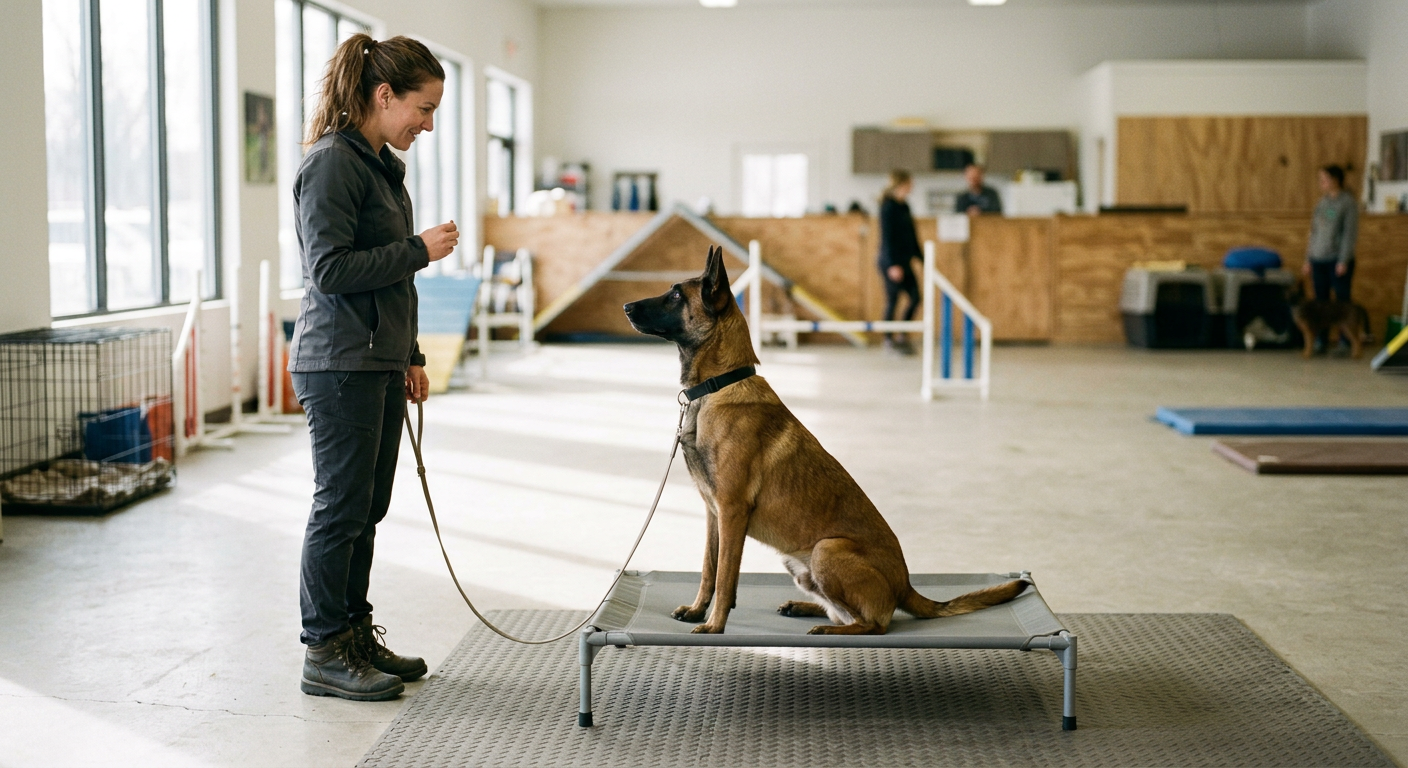
Between active training blocks, dogs practice "place" work. This is where dogs learn neutrality—the ability to exist calmly while life happens around them without needing to interact with every dog, person, or sound. Neutrality is the bedrock of good real-world behavior.
Proofing and Field Work
Once skills are understood in quiet environments, trainers add difficulty. We introduce real-world distractions—bicycles, unfamiliar dogs, open spaces, and environmental changes—to ensure commands hold up outside of a quiet room.
What Two Weeks Cannot Fix Without You
The most critical truth about immersive training is that the dog is only half of the equation. Trainers can establish clean mechanics, teach impulse control, and show a dog how good structure feels. But dogs are contextual learners. They learn how to behave with the person holding the leash and inside the environment they are living in.
If a dog spends two weeks learning that counter-surfing and leash-pulling are no longer options, but returns home to a household where rules are unenforced and boundaries are fuzzy, the dog will quickly revert to old patterns. Dogs will always test the boundaries of their immediate environment to see what rules apply.
This is why owner education is the pivotal piece of any successful program. Whether you are working with our team in Crestview, FL or elsewhere in Okaloosa and Walton counties, the turnover lesson and subsequent follow-up are just as important as the days your dog spent with the trainer.
What Handlers Must Maintain at Home
When your dog completes a board and train, you receive a dog with a clean slate, clear communication markers, and strong foundational habits. Keeping that momentum requires commitment to a few daily practices:
- Enforce the Rules Immediately: If the dog is not allowed on the sofa during training, do not let them jump on the sofa the first night home out of excitement. Consistency during the first thirty days home cements the new habits.
- Maintain Structured Walks: Walk with purpose. Do not immediately revert to letting the dog drag you toward every mailbox or fire hydrant. Keep your heel standard high.
- Use the Place Command Daily: Require your dog to use their place cot while you prepare dinner, eat meals, or answer the front door. This maintains their mental discipline and keeps impulse control sharp.
- Hold the Standard on Cues: Never repeat a command five times. Give a command once, expect compliance, and guide or correct calmly if they hesitate.
For owners who prefer to learn these mechanics alongside their dog from day one rather than sending them away, one-on-one coaching through Private Lessons can be an excellent alternative or a valuable follow-up to reinforce household routines.
Finding Real Balance
A two-week board and train is an investment in your relationship with your dog. It removes the stress, confusion, and constant conflict from your daily life and replaces it with clarity, mutual respect, and reliable control. When paired with committed handler leadership at home, those two weeks can transform your daily life with your dog for years to come.
If you are ready to build a clearer, more balanced relationship with your dog, we are here to help.
Contact Total Balance K9s to schedule a consultation and find the right training path for your family.