
Why a No-Pull Harness Won't Actually Teach Your Dog Not to Pull
August 24, 2026
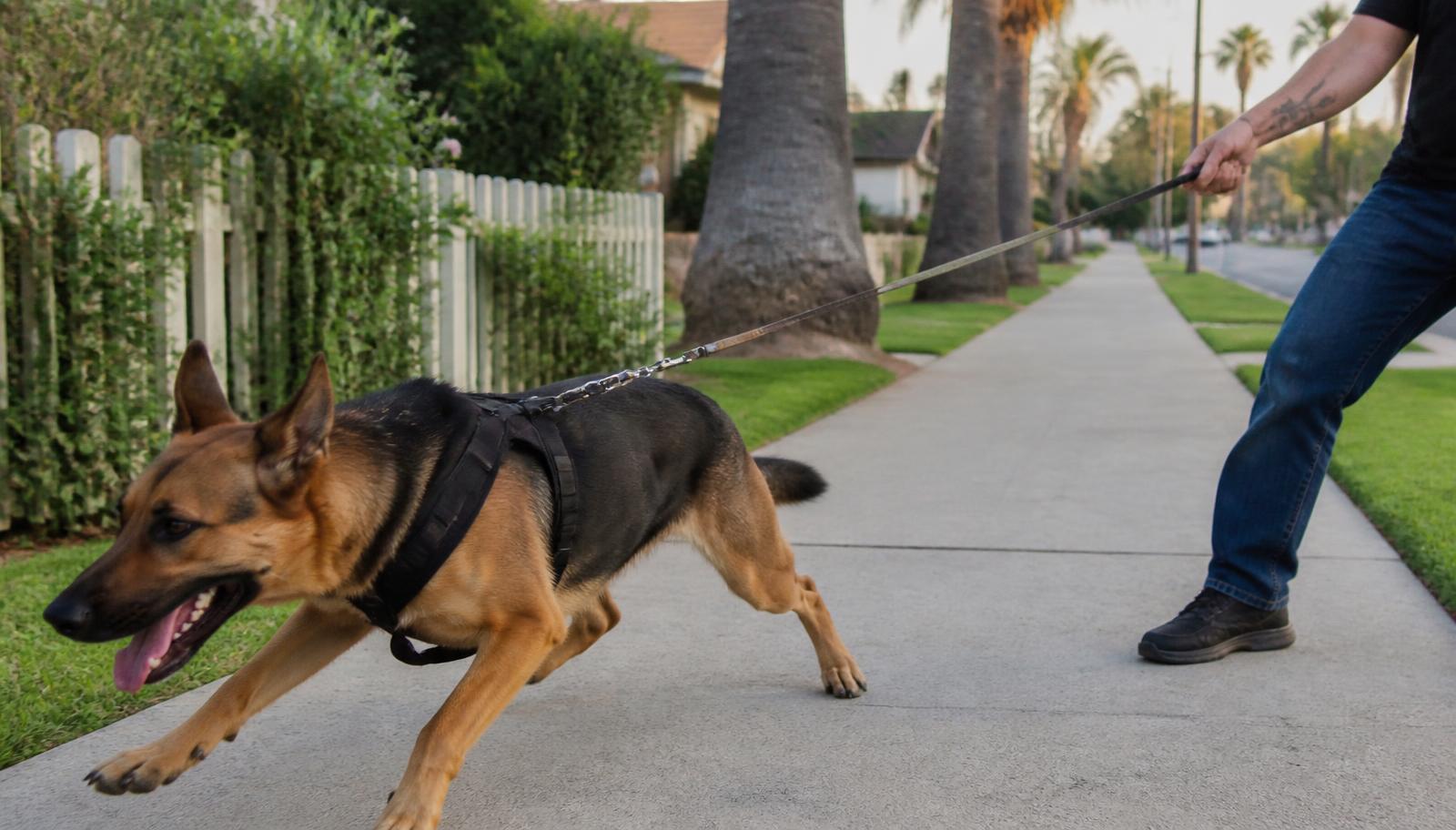
If your dog drags you down the sidewalk every time you go for a walk, chances are someone has recommended a harness.
They're marketed as an easy solution: put the harness on, clip the leash in, and suddenly walking your dog becomes easier.
But there's an important distinction every dog owner should understand:
A harness may help stop your dog from choking on the leash — but it doesn't actually teach your dog not to pull.
For a lot of dog owners, it actually makes their dogs pull more! Understanding the difference between managing a behavior and actually training it can completely change your daily walks.
Why Does Your Dog Pull on the Leash?
Dogs aren't born knowing how to walk politely beside a person.
Think about it from your dog's perspective. There are smells to investigate, people to meet, squirrels to chase, other dogs to see, and an entire world they want to explore.
Then we attach a leash and expect them to understand that they're supposed to stay beside us.
Pulling often works, too.
Your dog pulls toward something interesting, you continue walking, and eventually your dog reaches it.
From the dog's perspective:
Pulling = I get where I want to go.
The more often that happens, the more established the behavior can become.
That's why fixing leash pulling requires more than changing equipment. Your dog needs to learn an entirely different way of walking with you.
What Does a Harness Actually Do?
A harness is a tool, not a training program.
Different harness designs work differently. A front-clip harness can redirect a dog when they pull, making it more difficult for them to drive straight forward — but can cause pain and long term damage to their shoulders. A traditional back-clip harness distributes pressure across the dog's body rather than concentrating it around the neck.
That can be beneficial.
If a dog is constantly pulling against a collar, pressure is being placed around the neck and throat. A properly fitted harness can distribute that force across a larger area of the body and reduce pressure on sensitive neck structures.
But here's the important part:
Reducing the physical consequences of pulling is the opposite of teaching the dog not to pull, which can make things worse.
So they're not choking — but your dog still wants to charge toward another dog, drag you toward an interesting smell, or pull across the parking lot.
The equipment changed.
The dog's understanding didn't.
Can a Harness Actually Make Pulling Easier?
Depending on the type of harness, it can.
Research comparing collars with back-connection harnesses has found that dogs can produce greater pulling forces while wearing a harness.
And mechanically, that makes sense.
A traditional harness distributes force across the dog's chest and body rather than concentrating that pressure around the neck.
There's a reason working and pulling dogs are traditionally put into harnesses.
This doesn't mean harnesses are "bad." In many situations, a properly fitted harness can be an excellent management and safety tool for things like bike rides, specific training and seatbelt attachments.
But we shouldn't confuse equipment with training.
If your dog hasn't learned how to respond to leash pressure, stay engaged with you, and maintain a loose leash around distractions, changing the attachment point alone won't solve the underlying problem.
Management vs. Training
This is one of the biggest distinctions we teach Florida dog owners at Total Balance K9s.
Management helps control a behavior.
Training changes the behavior.
A no-pull harness may make a 90-pound dog easier to physically manage.
Training teaches that dog:
- How to respond appropriately to leash pressure
- Where you want them to walk
- How to maintain a loose leash
- How to stay engaged with their handler
- How to ignore or appropriately respond to distractions
- That pulling doesn't get them where they want to go
- What behavior does get them where they want to go
That's a completely different goal.
We don't just want your dog to behave because they're wearing a particular piece of equipment.
We want them to understand what you're asking them to do.
"But My Dog Stops Pulling With the Harness"
That's great — and there's nothing wrong with using equipment that makes walking your dog safer and more manageable.
The question is:
What happens when the equipment comes off?
If changing from a no-pull harness to another piece of equipment immediately brings the pulling back, the equipment was controlling the behavior rather than changing it.
Good dog training should build communication between you and your dog.
The long-term goal is a dog that understands how to walk appropriately with you instead of relying entirely on a piece of equipment to physically prevent unwanted behavior.
Loose-Leash Walking Is a Skill
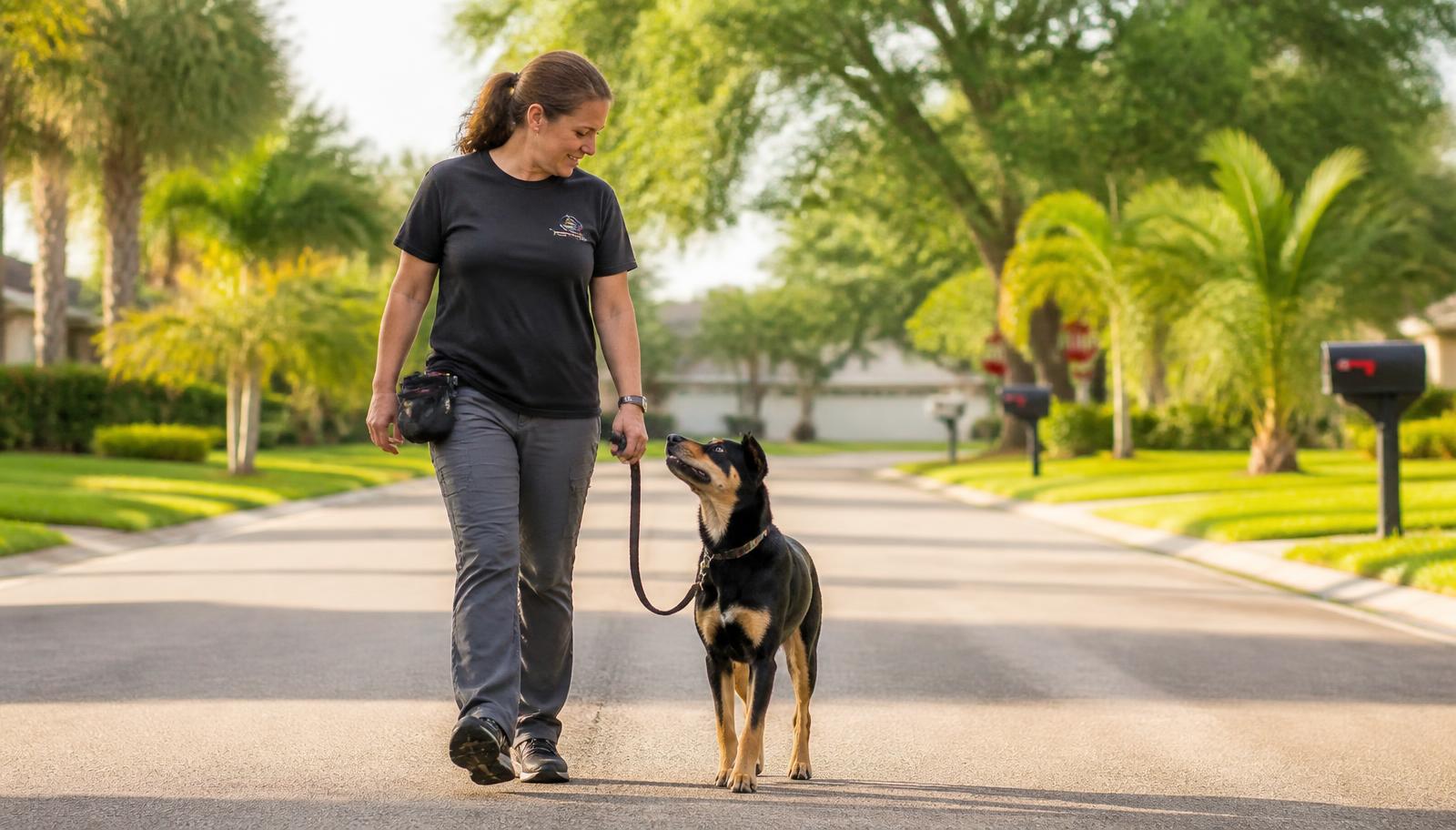
We often forget that walking nicely on a leash is something dogs have to learn.
A dog may behave perfectly inside your home and completely lose focus when you step outside.
That's because walking through a quiet neighborhood in Niceville is different from walking through a busy area in Destin.
Walking calmly near home in Freeport is different from encountering dogs, people, bikes, wildlife, and other distractions around Navarre or Fort Walton Beach.
Training has to progress through those environments.
A dog first learns the behavior with fewer distractions. Then we gradually introduce more challenging situations while teaching the dog that the same expectations still apply.
That's how reliable behavior is built.
Stop Looking for a Tool That Does the Training for You
There is nothing inherently wrong with using a harness.
For some dogs and owners, a harness may be the appropriate choice.
The problem begins when we expect the equipment to replace training, or when it works against the dog's biological predisposition.
Dogs have an innate physiological response to resist force (opposition reflex). The reason why they pull so hard on the collar still exists on the harness. On a traditional harness it increases the amount of ease to pull while decreasing force on the neck, and with a no-pull harness, that force is redirected to the shoulders in a way that the shoulder joints and surrounding structures were not designed to withstand repeatedly.
There isn't a magic harness, leash, or collar that can teach your dog everything they need to know.
Some equipment can help you communicate and safely manage your dog.
Training is what teaches the dog what that communication means.
If every walk feels like a tug-of-war, the solution isn't necessarily finding stronger equipment.
It's teaching your dog that the leash doesn't need to be tight in the first place.
Dog Pulling on the Leash? Total Balance K9s Can Help.
At Total Balance K9s, we help dog owners build better communication, better obedience, and more enjoyable relationships with their dogs.
If you're struggling with leash pulling, obedience, reactivity, puppy behavior, or everyday manners, we can help you address the behavior instead of simply covering it up with another piece of equipment.
We work with dog owners throughout Niceville, Freeport, Navarre, Destin, Fort Walton Beach, and surrounding Northwest Florida communities.
Your walks shouldn't feel like you're being dragged behind your dog.
Let's teach your dog how to walk with you.
Contact Total Balance K9s today to learn more about our dog training programs in Northwest Florida.