Practical Loose Leash Walking Training: The Five-Minute Daily Drill
August 31, 2026
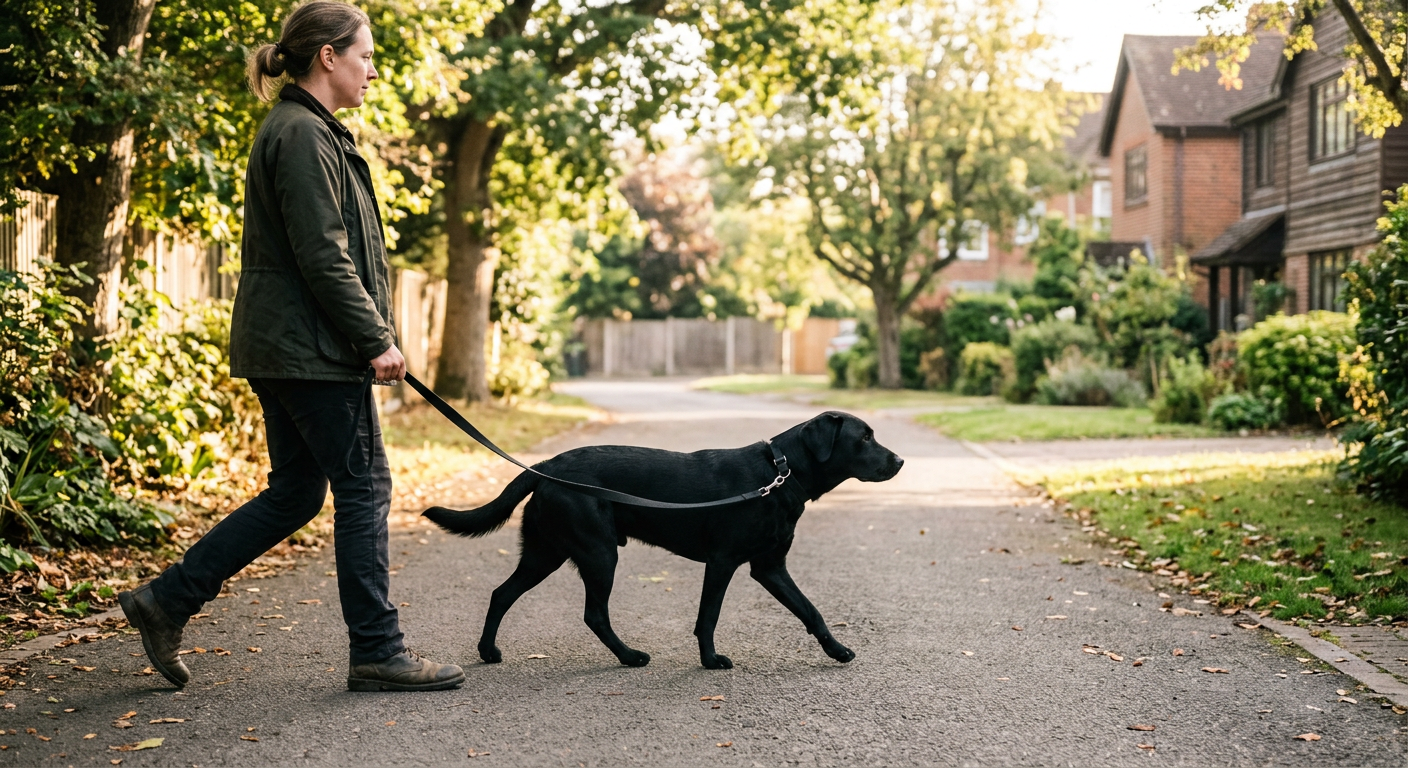
For many dog owners, daily walks feel less like an enjoyable outing and more like an Olympic tug-of-war match. If you are struggling with a dog that constantly strains at the end of the leash, you are not alone. Effective loose leash walking training does not require hours of frustrating struggles around the neighborhood. In fact, trying to train your dog during a full forty-minute walk is often why progress stalls.
Real headway begins in low-distraction environments using short, structured repetitions. When you teach your dog how to understand leash pressure and clearly define the physical zone where good things happen, walks quickly transform from chaotic to cooperative.
Here is how to break down the mechanics of loose-leash walking into a simple, five-minute drill you can practice every single day.
Reframing Leash Pressure as Information
A common mistake owners make is viewing the leash purely as a physical restraint. When a dog pulls forward, the handler instinctively pulls backward. This triggers an involuntary response called the opposition reflex: when a dog feels pressure pulling them backward, their natural instinct is to lean forward and pull harder.
To change this dynamic, you must teach your dog that leash pressure is information, not a barrier to fight against. Leash pressure should act like a gentle tap on the shoulder—a directional cue asking the dog to yield their weight toward you.
When your dog feels tension on the leash, they should learn that softening into that tension and moving toward you instantly relieves the pressure. Releasing pressure is the dog's reward for making the correct choice, while food or verbal praise reinforces the desired position next to your leg.
The "Sweet Spot": Rewarding Position Over Perfection
Many handlers spend the entire walk reacting to what the dog is doing wrong. They correct pulling after it happens, but forget to communicate where the dog actually should be.
Instead of focusing on stopping the pull, shift your mindset to rewarding the position. We call this the "sweet spot"—the space right beside your hip or leg where you want your dog to travel.
To build value for this zone:
- Deliver food rewards exclusively at your seam line (the outer seam of your pant leg).
- Keep your reward hand close to your body rather than reaching out toward the dog's nose.
- Reward frequently whenever the dog chooses to orient toward you and match your pace.
When your dog realizes that the most rewarding place in the world is directly beside your hip, staying close becomes their idea rather than an enforced rule.
The Five-Minute Daily Drill
Set aside five minutes each day to work on this drill in a boring, low-distraction environment, such as a quiet hallway, garage, or your driveway. Leave the distractions of the open neighborhood for later.
Step 1: Set Up and Stand Still
Put your dog on a standard six-foot flat leash attached to a flat collar, martingale, or training collar. Hold the loop in the hand furthest from your dog, gathering excess slack in your hands so there is a soft curve in the line.
Stand completely still. Do not say anything yet. Allow your dog to move around you until they hit the end of the leash.
Step 2: Apply Gentle, Steady Pressure
The moment your dog hits the end of the leash, apply gentle, continuous sideways or backward pressure toward your hip. Do not jerk or yank the leash. Simply hold a firm, steady tension.
Step 3: Release and Reward the Yield
The millisecond your dog takes half a step toward you or turns their head to look at you, release the tension completely so the leash goes slack. Mark the moment with a verbal cue like "Yes!" and feed a piece of food right against your pant seam.
Step 4: Add Simple Directional Changes
Once your dog consistently yields to pressure while stationary, begin taking three to five steps forward. Before your dog passes your knee, make a calm 180-degree turn in the opposite direction.
As you turn, apply gentle directional guidance with the leash. When your dog turns with you and catches up to your seam line, mark and reward. Repeat this back-and-forth movement across your training space for three to five minutes.
Why Consistent Loose Leash Walking Training Beats Marathon Walks
Five minutes of clean, focused repetitions will teach your dog more than forty-five minutes of practicing bad habits around the block. When you take a distracted dog on a long walk before they understand the basics of leash mechanics, you inadvertently allow them to rehearse pulling.
Keeping sessions brief provides distinct advantages:
- Handler clarity: You can focus on your own leash handling, posture, and reward timing without feeling rushed or overwhelmed.
- Dog focus: Short sessions end before mental fatigue sets in, keeping your dog engaged and eager to work.
- Reduced frustration: Both you and your dog finish the session on a successful note rather than a battle of wills.
If you need extra guidance tailoring mechanics to your dog's specific personality and energy levels, working through private lessons can help you troubleshoot your handling skills in one-on-one sessions.
Transitioning to Real-World Walks
Once your dog reliably yields to pressure and checks into the sweet spot in your driveway, you can slowly increase the level of difficulty. Move from the driveway to the quiet sidewalk in front of your house, then gradually down the street.
If your dog begins pulling ahead again, do not get frustrated—simply take it as feedback that the environment is currently too stimulating for their skill level. Take two steps back into a quieter zone, reset the leash mechanics, and rebuild focus.
As your foundation solidifies, joining structured pack walks and group classes is an excellent next step to help your dog practice maintaining focus around other dogs and handlers in everyday environments.
Building a Lasting Relationship
Loose-leash walking is not about turning your dog into a robot; it is about establishing clear, two-way communication. When your dog understands how to read leash feedback and finds value in staying close, walking becomes a peaceful, shared experience rather than a daily chore.
If you live in Crestview, FL or the surrounding communities and want hands-on help building clear communication on the walk, contact our team to schedule an evaluation and get started on a training plan that works for you and your dog.