
Managing Leash Reactivity: Route Planning for Busy Neighborhoods
October 20, 2026
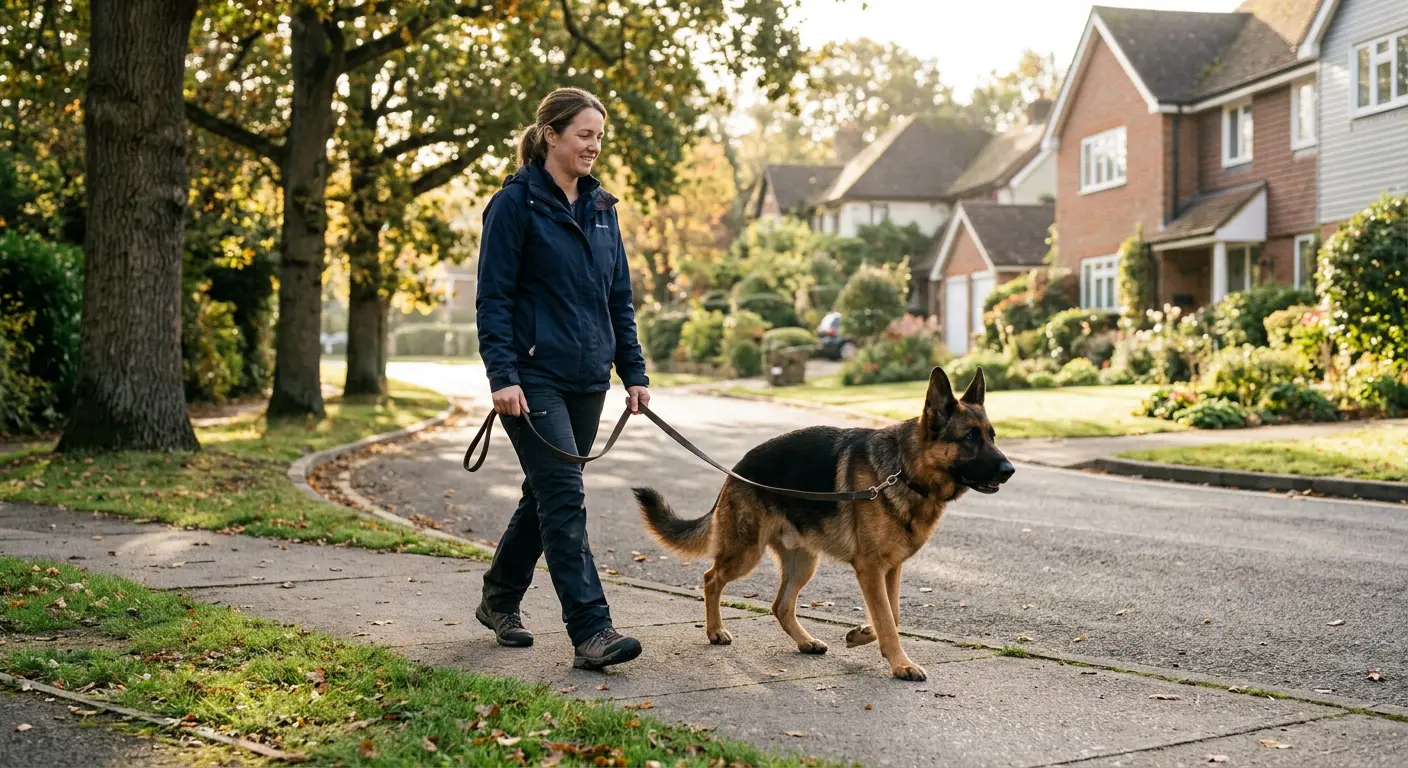
Walking your dog through a lively subdivision should be an enjoyable part of your daily routine, but for owners dealing with leash reactivity, every outing can feel like navigating an obstacle course. Barking dogs behind privacy fences, surprise encounters around blind corners, and narrow sidewalks with nowhere to create space often turn a simple potty walk into a high-stress event for both dog and handler.
Leash reactivity is rarely an issue of a dog simply being difficult. In most cases, it stems from frustration, lack of spatial comfort, or heightened arousal triggered by the environment. While long-term behavior modification requires structured obedience and clear communication, your immediate management strategy plays a critical role. By taking control of where and when you walk, you can lower your dog's stress levels and create productive opportunities to teach calm behavior.
Understanding the Neighborhood Pressure Cooker
Subdivisions and master-planned communities across the Panhandle are designed for density. Sidewalks are typically four to six feet wide, bordered on one side by passing vehicle traffic and on the other by front yards where other dogs may be stationed in windows or behind fences.
When a dog experiences leash reactivity, proximity is the primary trigger. When two dogs approach each other head-on along a narrow sidewalk, social pressure builds rapidly. In dog communication, direct frontal approaches are inherently confrontational. Off-leash dogs naturally arc, sniff the ground, and negotiate distance. On a six-foot leash bordered by landscaping and road traffic, neither dog has the choice to yield or create space.
Repeatedly putting your dog into situations where they feel forced to react reinforces the behavior. Every outburst reinforces the neural pathway that barking and lunging are the necessary responses to an approaching trigger. Breaking that cycle starts with changing the geography of your walks.
Finding Low-Traffic Training Windows
One of the simplest ways to set your dog up for success is shifting the time of day you step out the front door. Neighborhood traffic generally follows predictable patterns.
In communities like Niceville, FL and neighboring coastal towns, peak neighborhood activity typically occurs in two daily windows: early morning between 6:30 AM and 8:00 AM, and late afternoon between 4:30 PM and 6:30 PM. These are the hours when families walk their dogs before and after work, children head to and from school bus stops, and delivery trucks make their rounds.
If you take a reactive dog into the neighborhood during these peak windows, you are asking them to process multiple high-level distractions simultaneously. Consider shifting your primary training walks into lower-traffic windows:
- The Mid-Morning Window (9:00 AM – 11:00 AM): Most commuters have left, school is in session, and the streets are substantially quieter. In the warmer months, this window allows you to train before the midday heat peaks while still avoiding the morning rush.
- The Early Afternoon Lull (1:30 PM – 3:00 PM): A brief window before schools let out where residential foot traffic is at its lowest.
- The Late Evening Walk (After 7:30 PM): Once dinner hour settles and darkness begins to fall, foot traffic drops off dramatically. Keep in mind that lower visibility requires extra handler vigilance, but the overall volume of triggers is significantly reduced.
Strategic Route Planning to Reduce Leash Reactivity
Managing leash reactivity is not about hiding from the world forever; it is about controlling the difficulty of the environment while you build your dog's impulse control and engagement. Before you clip on the leash, have a clear map in your head.
Scout the Route Without Your Dog
Take a solo walk around your neighborhood to identify physical advantages and hazards. Look for wide grassy swales, open common areas, and streets with wide paved shoulders rather than narrow enclosed walkways. Note homes with known barrier-reactive dogs that run fences or bark from front windows, and build a route that bypasses those properties entirely.
Avoid Cul-de-Sacs and Dead Ends
While cul-de-sacs might seem quiet, they are tactical dead ends. If an off-leash dog or another handler turns into the entrance of the cul-de-sac while you are at the end of the circle, your exit route is cut off. Stick to grid-style street layouts or open loop routes where you always have multiple directions to turn if another dog appears.
Identify Open "Bailout Zones"
As you walk, identify safe areas where you can step off the path to create ten to twenty feet of space. These include:
- Unfenced corner lots with deep setbacks
- Neighborhood park perimeters and open retention area paths
- Empty driveways on cross streets
- Wide street medians
Having these zones in mind allows you to calmly guide your dog into a working position well before an oncoming dog gets close enough to trigger a reaction.
Practical Handling on the Street
Route planning only works if you pair it with active handler awareness. When you walk a reactive dog, your attention needs to be on the environment, not on your phone.
- Scan 50 to 100 feet ahead: Look for approaching dogs, opening garage doors, and turning cars. Spotting a trigger early gives you the time to calmly change direction or cross the street without urgency.
- Avoid tight leash tension: When handlers see a trigger, their instinct is often to reel the leash tight. This sudden physical tension travels straight down the line, signaling to the dog that a threat is present. Keep the leash loose while calmly executing a turn or lane change.
- Use simple directional changes: You do not need to stand your ground and test your dog's willpower on every corner. A smooth 180-degree turn, a diagonal street cross, or stepping behind a parked vehicle to break the line of sight keeps your dog under threshold and focused on you.
Building Beyond Neighborhood Walks
Careful route planning provides immediate relief, but avoidance is a management strategy, not a complete training solution. The goal is to build a reliable foundation of obedience and neutral focus so that neighborhood distractions no longer dictate your schedule.
Working through these challenges often requires hands-on coaching to address leash mechanics, handler timing, and threshold management. Structured Private Lessons allow you to work directly with a trainer in real-world settings, breaking the behavior down into manageable steps tailored to your dog's temperament.
As your dog develops better focus and emotional control, controlled social exposure becomes the next step. Participating in structured Group Classes / Pack Walks gives you the opportunity to practice handling around other dogs in a controlled, respectful environment where every handler is working toward the same standard of neutrality.
Take the Stress Out of Daily Walks
Living with a reactive dog can feel isolating, but you do not have to figure out the process alone. With clear communication, proper structure, and practical handling strategies, you can restore calm and confidence to your daily walks.
If you are ready for practical, balanced guidance tailored to your dog and your neighborhood, reach out to our team to schedule a consultation today.
Explore private lessons and dog training in Crestview.