
House Training an Adult Dog: A Practical Guide for Rescue Owners
October 13, 2026
Welcoming a rescue dog into your home is an exciting milestone, but it often comes with an adjustment period. Many owners assume an adult dog will arrive fully potty trained, only to discover puddle spots on the rug or accidents in the hallway during the first week. Successfully house training an adult dog requires recognizing that shelter transitions, stress, and unknown histories disrupt regular bathroom habits. With a structured schedule, intentional confinement, proper cleanup techniques, and genuine patience, you can help your rescue build reliable, clean habits that last a lifetime.
Why Adult Rescue Dogs Have Accidents
Before jumping into solutions, it helps to understand why an adult dog might eliminate indoors. Dogs do not soil the house out of spite or confusion about who is in charge. In most cases, accidents happen for a few straightforward reasons:
- Lack of Prior History: Some dogs lived outdoors, in kennels, or in previous homes where clear boundaries were never established.
- Stress and Decompression: Moving into a new environment disrupts a dog's digestive system and nervous system. The transition triggers physical stress responses that make holding their bladder much harder.
- Unclear Communication: Your dog may not know how to signal that they need to go outside in this new layout.
- Substrate Confusion: If a dog spent months on concrete or gravel at a shelter, they may not immediately understand that grass or pine needles are the intended potty surfaces.
Treating your adult rescue like a brand-new puppy for the first several weeks removes assumptions and sets both of you up for success.
The Core Pillars of House Training an Adult Dog
Re-establishing bathroom habits comes down to four fundamental pillars: structured schedules, thoughtful confinement, thorough cleanup, and persistent patience.
1. Build a Predictable Schedule
Dogs thrive on routine. When meals, water, walks, and rest happen at predictable times, their digestive system becomes equally predictable.
Feed your dog at set times each day rather than free-feeding. When food goes in at the same time, waste comes out on a schedule you can anticipate. Take your dog outside to their designated bathroom area:
- First thing in the morning
- Within 15 to 30 minutes after every meal
- Immediately after waking up from naps
- Right after play sessions or high-arousal activity
- Right before bed
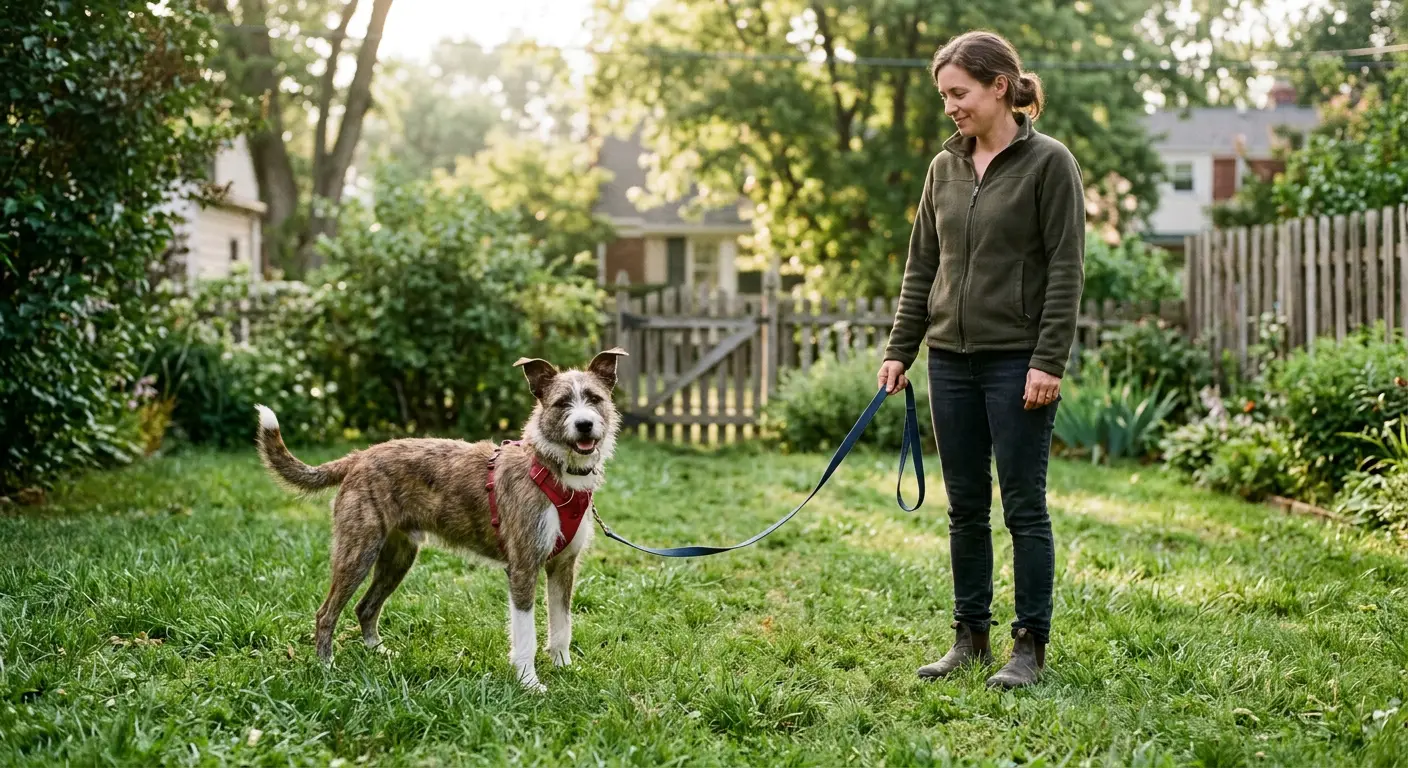
Take your dog out on a leash even if you have a fenced yard. Standing in one spot on a six-foot leash keeps the dog focused on eliminating rather than sniffing borders, chasing lizards, or exploring bushes. Give them three to five minutes of calm, boring stillness. When they go, calmly praise them and offer a gentle reward, then allow a few minutes of relaxed walking or sniffing as an added benefit.
2. Strategic Confinement and Supervision
Freedom in the house is a privilege earned through reliable habits. If an adult dog is wandering unsupervised from room to room, you will miss their pre-potty signals—such as pacing, intense sniffing, circling, or sudden restlessness.
When you cannot give your dog your full attention, use a properly sized crate, a secure exercise pen, or a closed-off, dog-proofed room with non-absorbent flooring. Most dogs have a natural instinct to avoid soiling their sleeping area, provided the space is not so large that they can eliminate in one corner and sleep in the other.
When you are together in the living area, keep the dog close. You can use an "umbilical" setup—attaching the dog's leash to your belt loop—to ensure they never wander out of sight. This immediate proximity allows you to spot warning signs instantly and guide them outside before an accident happens.
3. Handle Accidents Effectively
Accidents will occasionally happen during the transition. How you respond to them makes all the difference in building trust and clarity.
If you catch your dog in the middle of an accident, interrupt them with a calm, neutral sound to break their focus. Immediately guide them outside on a leash to finish in their designated spot. When they finish outdoors, praise them warmly.
If you discover an accident after the fact, do not scold, yell, or rub the dog's nose in the mess. Dogs associate corrections only with what they are doing in the exact second the correction occurs. Punishing a dog after the fact teaches them to fear you or to hide when they need to eliminate, which makes housebreaking significantly harder.
Clean every indoor accident thoroughly with an enzymatic cleaner. Standard household disinfectants may mask the smell to human noses, but dogs can still detect the underlying organic compounds, signaling to them that the spot is an acceptable toilet area. Saturate the area according to the cleaner's instructions to eliminate all scent markers completely.
4. Develop a Patient, Relationship-First Mindset
Adult rescues carry past experiences that take time to untangle. Some dogs settle into a pristine routine within two weeks; others require two months of diligent, uninterrupted structure before their system fully normalizes.
Consistency on your end builds confidence on theirs. When you provide clear boundaries without anger or frustration, your dog learns to trust your leadership and relax into their new life.
Daily Housebreaking Checklist
Keep this quick checklist in mind as you navigate each day with your rescue dog:
- Monitor Water Intake: Keep fresh water accessible throughout the day, but consider picking up the water bowl two hours before bedtime for dogs working through nighttime accidents.
- Log the Timing: Keep a simple written or phone log of when your dog eats, drinks, pees, and poops during the first two weeks to identify their biological rhythms.
- Watch the Weather: Sudden temperature changes or heavy rain can make rescue dogs hesitant to step onto grass. Step outside with an umbrella and stay patient until they finish.
- Keep Outings Purpose-Driven: Separate bathroom breaks from structured exercise walks so your dog learns the difference between working, exercising, and eliminating.
Getting Professional Support
If your rescue dog is struggling with ongoing housebreaking setbacks, separation stress, or crate anxiety, having hands-on guidance can save weeks of frustration. At Total Balance K9s, we help owners across Northwest Florida establish clear communication and reliable routines with their dogs.
Our customized private lessons allow us to assess your home setup, your dog's daily routine, and specific behavioral triggers right where you live. For owners needing a deeper foundation of obedience and structured habits, our immersive board and train program provides focused daily training to reset problem behaviors and build reliable domestic manners.
Whether you are based in Crestview, FL or neighboring communities along the Emerald Coast, our experienced team is here to help you turn early adoption hurdles into a calm, harmonious life with your canine companion.
Ready to get your rescue dog on the right track? Contact Total Balance K9s today to schedule your initial consultation.
Explore private lessons and dog training in Crestview.