
Crate Training a Dog Without Guilt: The Night One Plan and Beyond
September 6, 2026
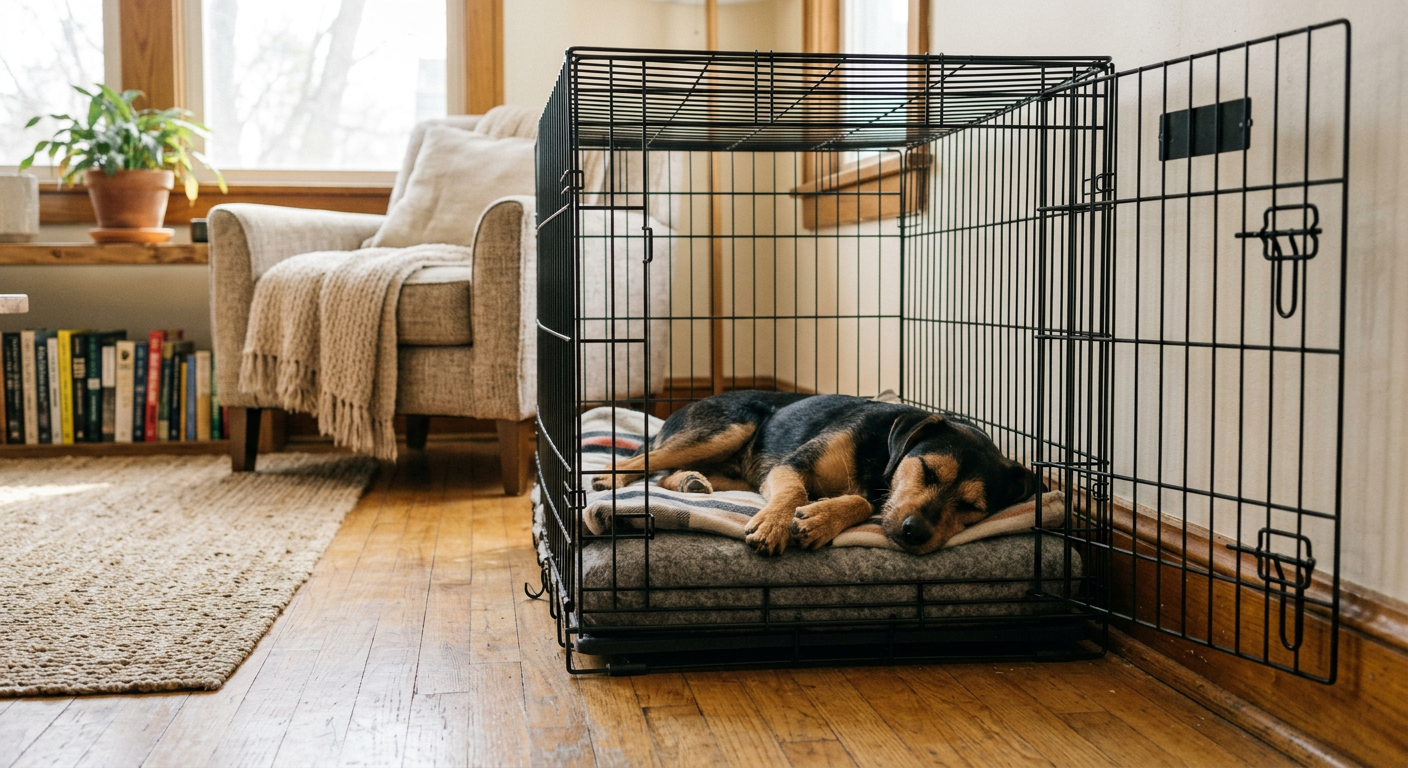
When you begin crate training a dog, it is completely normal to feel a pang of human guilt. You see metal bars or a small enclosed space, and your mind interprets it as a cage or a penalty box. Your dog, however, sees the world through an entirely different lens. Dogs do not crave open floor plans; they crave clarity, safety, and a quiet place to truly power down.
At Total Balance K9s, we view the crate not as a punishment or a place to stash a nuisance, but as an essential tool for biological rest, emotional regulation, and safety. Understanding how to introduce this tool correctly transforms the crate from a source of household stress into your dog's favorite sanctuary.
Why Crate Training a Dog Is an Act of Care, Not Punishment
Adult dogs typically require between twelve and fourteen hours of sleep per day, and puppies need even more—often eighteen to twenty hours. In an open living room full of foot traffic, neighborhood noises, ceiling fans, and family activity, most dogs remain in a state of low-grade vigilance. They wake up every time someone shifts on the couch or walks to the kitchen.
When dogs do not get enough deep, restorative sleep, behavioral issues quickly follow. You see frantic zoomies, nipping, destructive chewing, separation distress, and emotional volatility.
Crate training creates an environmental "off-switch." It sends a clear signal to your dog's nervous system: You are safe, nothing is expected of you right now, and you do not have to monitor the house. By removing the burden of freedom while your dog is still learning impulse control, you set them up to succeed.
The Core Benefits of a Consistent Crate Routine
- Injury and Emergency Prevention: It keeps curious puppies and adolescent dogs from ingesting foreign objects, chewing electrical cords, or getting into household toxins when you cannot supervise them directly.
- Housebreaking Acceleration: Because dogs naturally avoid soiling their immediate sleeping area, a properly sized crate teaches bladder and bowel control faster than free roaming.
- Travel and Vet Readiness: At some point in your dog's life, they will need to stay in a kennel at a veterinary clinic, groomer, or boarding facility. Dogs accustomed to a crate handle these situations calmly, while unconditioned dogs experience significant distress.
- Emotional Decompression: It provides an undisturbed zone where your dog can escape household commotion, children, or visiting guests.
The Night One Plan: Step-by-Step
Bringing a new puppy or rescue dog home is exciting, but night one is often where anxiety takes over for both dog and handler. Having a concrete plan prevents reactive decision-making in the middle of the night.
1. Set the Location Thoughtfully
For the first week or two, place the crate in your bedroom near your bed. Dogs are social animals, and being in a brand-new environment in complete isolation can trigger genuine panic. Being able to hear your breathing and smell your presence provides immediate reassurance.
2. Drain Physical and Mental Energy Before Bed
Do not expect a high-energy dog to settle immediately into a crate. About an hour before bedtime, engage in structured interaction: a brisk walk, basic engagement exercises, or a short food-search game. Allow them thirty minutes to wind down quietly afterward.
3. Manage Food and Water Timing
Take up food bowls about three to four hours before bedtime, and limit heavy water consumption within the final two hours. Take your dog out for a final, boring potty break right before putting them into the crate. Keep this trip strictly business—no playing, no excited voices.
4. Create a Calm Environment
Keep the crate dark and comfortable. Covering three sides of a wire crate with a light sheet or crate cover often helps reduce visual stimulation. A white noise machine or low fan can mask sudden outdoor sounds.
5. Handle Nighttime Whining with Discernment
There is a critical difference between a brief protest and genuine distress or a bathroom emergency:
- Protest vocalization: Intermittent whining, grumbling, or light barking. Wait it out calmly. If you let the dog out while they are actively barking, you teach them that noise opens the door.
- Bathroom need: Sudden restlessness after a period of quiet sleep, rhythmic pacing, or sharp whines. Calmly leash your dog, carry or walk them directly outside to the potty spot, give them two minutes to eliminate, and immediately return them to the crate with minimal conversation.
Daytime Habits That Make Crate Training Effortless
Nighttime success is built during daylight hours. If your dog only experiences the crate when you are leaving the house or turning off the lights, they will naturally develop negative associations with it.
Feed your dog their daily meals inside the crate with the door wide open. Drop high-value treats inside randomly throughout the day so your dog discovers rewards on their own. Practice asking your dog to step inside for five to ten seconds, rewarding calm behavior, and releasing them before any frustration builds.
Once your dog enters willingly, practice closing the door while you remain in the room doing chores, reading, or working. This teaches your dog that a closed door does not equal abandonment.
Common Pitfalls to Avoid
Even well-intentioned owners can accidentally build crate resistance through a few common habits:
- Using the Crate in Anger: Never march your dog to their crate with harsh body language or shouting after an unwanted behavior. The crate must remain a neutral, safe space.
- Buying an Oversized Crate Too Soon: If a puppy has enough room to sleep in one corner and eliminate in the other, housebreaking will stall. Use a divider panel to keep the space just large enough for the dog to stand up, turn around, and lie down comfortably.
- Letting the Dog Out at the Peak of Excitement: Wait for at least three to five seconds of calm, quiet posture before opening the door. When you do open it, maintain a calm demeanor so exiting the crate is not treated as an explosive reward.
Professional Guidance for Long-Term Balance
Every dog brings a unique temperament to the table. Some settle into a crate within forty-eight hours, while dogs with high arousal or early-life insecurities require a more nuanced, individualized approach.
If you are working through crate resistance or balancing early foundation work, our private lessons provide clear, real-time coaching tailored directly to your home environment. For owners who want an immersive foundation established by an experienced team, our board and train programs build solid crate routines alongside essential obedience and real-world manners.
We regularly help dog owners across Crestview, FL and neighboring communities cut through the noise and build dependable, stress-free routines that work for the entire family.
Build a Confident Routine Today
Crate training is not about restriction—it is about clarity, safety, and giving your dog the restful boundaries they need to thrive. If you are ready for a clear, practical roadmap to help your dog succeed, we are here to help.
Contact Total Balance K9s today to schedule a consultation and take the first step toward a calm, well-balanced household.